


Psikolojik Danışma ve Rehberlik Uygulama ve Araştırma Merkezi

Mental Health Emergencies: Definition, Intervention and What to Do
What Is a Mental Health Emergency? A mental health emergency is a situation in which an individual poses a risk of harm to themselves or others, where there is a marked impairment in judgement, emotional regulation or behavioural control, and which cannot be managed independently.
Mental health emergencies are not situations that can wait for a psychological support appointment. In such cases, the primary aim is to ensure the individual’s safety and to facilitate access to emergency medical services.
When Is It a Mental Health Emergency? If one or more of the following symptoms are present, the situation is considered a mental health emergency and you should call 112 immediately:
• Risk of Suicide: Thoughts, intentions, plans or attempts at suicide.
• Self-Harm or Harm to Others: Risk of causing physical harm to oneself or another person.
• Disconnection from Reality (Psychosis): Hearing voices, seeing visions, or experiencing severe delusions (unrealistic beliefs).
• Loss of Control: Serious impairment of consciousness, judgement, or behavioural control.
• Safety Risk: The individual expressing an inability to keep themselves safe, the risk of being left alone, or dangerous situations arising from substance use or emotional distress.
IMPORTANT INFORMATION AND LIMITATIONS OF LIABILITY
PDRM Is Not an Emergency Service Our University’s Centre for Psychological Counselling and Guidance Practice and Research (PDRM) does not have a psychiatrist (doctor) on staff. PDRM is a unit that provides counselling services; it does not provide medical emergency care.
Therefore, in cases of mental health emergencies, the primary objective is to ensure the individual is transferred to the nearest healthcare facility with a psychiatrist via the 112 Emergency Medical Services.
What Should You Do? (Emergency Action Plan)
If you or someone around you is experiencing the symptoms listed above, do not try to manage the situation on your own. Follow the steps below in order:
1. Do Not Stay Alone / Do Not Leave Someone Alone: If you believe you or someone else is at risk: do not stay alone until professional help arrives, and try not to leave the person alone. For the person’s safety, do not leave their side until professional teams arrive.
If you are at risk, move to a safe place and inform a friend or family member who will not leave you alone. If it is not possible for someone to be with you, contact the relevant support services (PDRM, Security) immediately. The relevant services will ensure someone remains with the person until the 112 Emergency Medical Services arrive and will initiate the necessary referral process.
2. Call for Help (Order of Priority) If you believe you are experiencing a mental health emergency, contact the following services immediately:
• For Emergency Assistance: 112 Emergency Call Centre (24/7)
• For On-Campus Security: University Protection and Security Department (24/7)
| Gelişim Campus - 0332 205 11 88 |
| Faculty of Engineering and Natural Sciences - 0332 205 11 90 |
| School of Technical Sciences - 0332 205 11 94 |
• For Information and Coordination: PDRM
o 0332 205 14 65 (During office hours only)
Note: If the incident occurred outside office hours, the process should be managed via 112 and the Security units; PDRM must be informed on the following working day.
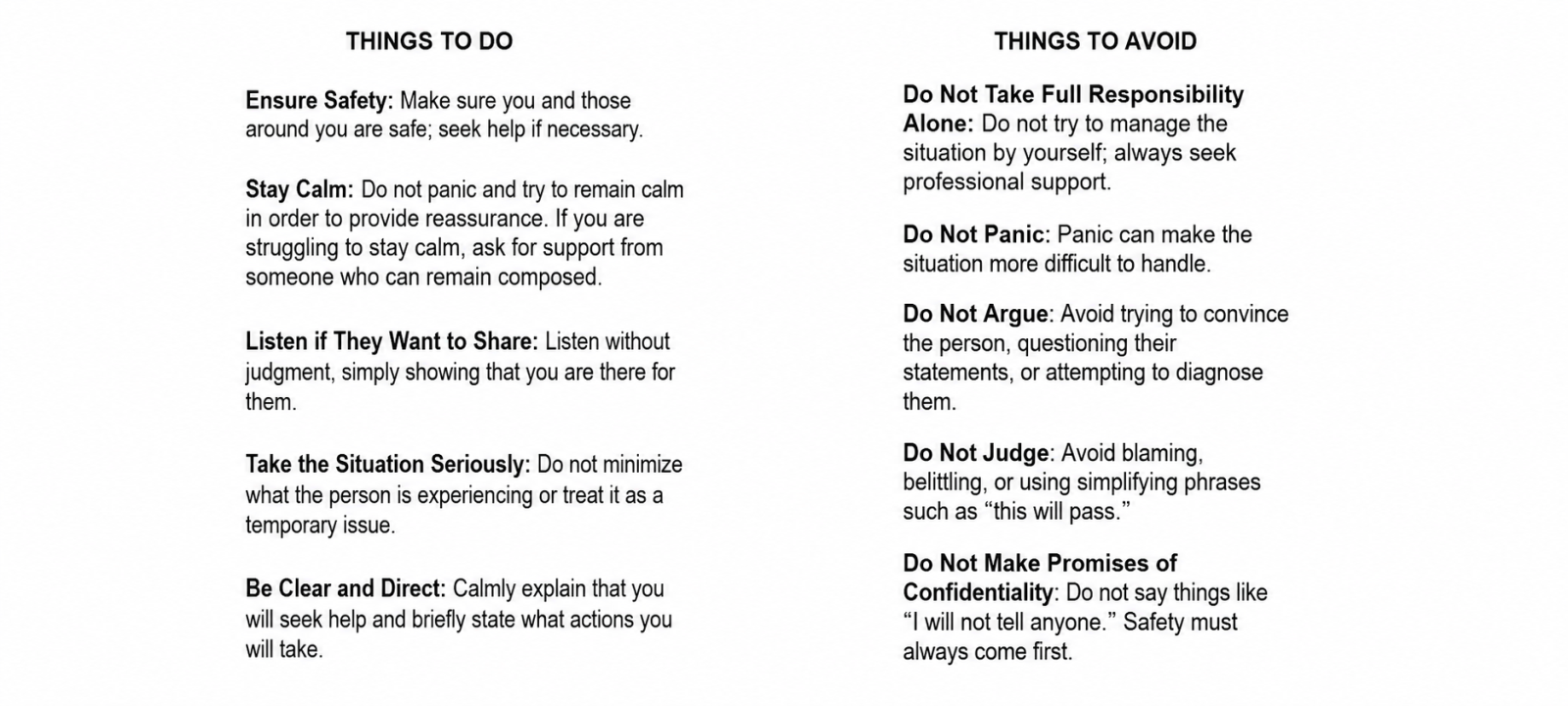
What Should You Do?
Your approach to a person experiencing a mental health crisis can help prevent the crisis from escalating.
Frequently Asked Questions and Ethical Principles
What Happens If the Person Refuses Help? If a person experiencing a mental health crisis refuses help, this does not mean that help should not be sought.
• The priority is the safety of the person and those around them.
• If the person resists help, support is requested from the University Security Unit.
• The Security Unit and 112 emergency services ensure the individual is safely transported to hospital.
• This is not a report or an act of betrayal; it is a life-saving intervention.
Is the Principle of Confidentiality Breached? Under normal circumstances, confidentiality is paramount at PDRM. However, when the matter concerns ‘the Right to Life and Safety’ (suicide risk, risk of harming others, etc.), the principle of confidentiality is restricted within the framework of ethical guidelines.
• To ensure the individual’s safety, information may be shared with their family or a close relative they have designated, relevant university departments (Halls of Residence management, Academic Advisers, etc.) and healthcare providers.
• The aim here is not to punish the individual, but to ensure their survival and access to the necessary intervention.